Thank you — your case intake was received. Attorney Di Kang will reply within 2 PRC business days.
Beijing Celue Law Firm (Founded 2005 · Top 60 PRC Law Firm · 14 Nationwide Offices) | Lead Counsel: Di Kang, J.D., MBA (PRC Licensed Attorney & New York Bar)
My Chinese Factory Won't Release My Molds. What Can I Do?
Di Kang · PRC lawyer · New York Bar (Active Good Standing) · Beijing Celue Law Firm Published
General information on PRC law, not legal advice, and not advice on U.S. or New York law.
Short answer
If your contract says the molds are yours and you don't owe the factory money, Chinese courts have ordered them returned, including to foreign buyers. A factory's right to hold tooling is narrow. The fastest lever is a court freeze, which a court must rule on within 48 hours of an application. The hard parts are proving ownership and physically getting heavy tooling out of the building.
Key takeaways
A Chinese court must rule within 48 hours on a pre-suit application to freeze molds, and the applicant must then sue within 30 days or the freeze is lifted (Civil Procedure Law, Art. 104).
Under Article 228 of China’s Civil Code, when parties agree the transferor keeps possession, ownership passes when that agreement takes effect, so molds can belong to a buyer while on the factory floor.
Under China’s Civil Code, a factory’s lien ends if it accepts other security (Art. 457), and for divisible property such as separate molds, the value held should match the debt (Art. 450).
In March 2020, Guangzhou’s Huadu District Court ordered a supplier to return molds to German buyer Stern, which had paid USD 16,000 under a Mold Ownership Agreement ((2018)粤0114民初4165号).
In 2025, Tianjin’s Wuqing District Court held that a processor had no lien over three production molds and ordered them returned within 10 days ((2025)津0114民初7416号).
In April 2018, a German company called Stern sued its Guangzhou supplier, Jinhuamei, in the Huadu District Court ((2018)粤0114民初4165号). Stern had paid USD 16,000 for the molds under a signed Mold Ownership Agreement. It said the molds became Stern's once paid, and that the supplier must return them whenever Stern asked. After a dispute over defective parts, the supplier refused to release the molds until Stern sent back every part it had replaced, and claimed a lien under Chinese law.
In March 2020, the court ordered the molds returned. It accepted the German law the parties had chosen for ownership, held that the USD 16,000 payment made the molds Stern's, and found that the return-on-demand clause ruled out any lien. Stern also got RMB 20,000 for replacing defective parts. It lost its claims for lost sales and replacement tooling for lack of proof, and had to pay RMB 37,678 for defective parts it never sent back. It had first asked for the molds in February 2016, four years earlier.
Stern won because its paperwork was clear. Buyers who paid a "mold fee" with no ownership clause, or signed a contract saying the factory owns the tooling, start from a much weaker place. Here is how Chinese law draws that line.
What Chinese law says
1. Ownership turns on the paperwork, not just the payment.
Ownership of movable property normally passes on delivery. Factories lean on this: "You never took the molds, so they were never yours." But Article 228 of the Civil Code says that when the parties agree the transferor keeps possession, ownership passes when that agreement takes effect. Chinese lawyers call this constructive delivery (占有改定). If your contract says the molds belong to you and the factory holds them for you, they're yours, even on the factory floor. If the contract says the factory owns them, a payment alone won't change that.
2. If they're yours, you can demand them back.
Article 235 lets an owner demand return of property held by someone with no right to hold it. Article 234 lets you ask a court to confirm ownership first, which matters when the factory denies your title.
3. The factory's "lien" is narrower than it sounds.
Chinese law gives a creditor a right of retention (留置权), a statutory lien, over a debtor's movable property it lawfully holds (Article 447). The Civil Code then fences it in:
Same transaction. The property must belong to the same legal relationship as the debt (Article 448). There's an exception when both sides are businesses, so this point alone rarely wins a B2B case.
No lien if you agreed to none (Article 449).
Proportionality. If the property is divisible, such as a set of separate molds, the value held should match the debt (Article 450).
Security ends it. The lien is extinguished if the factory accepts other security from you (Article 457).
Most mold disputes sit inside a work contract (承揽合同). Article 783 gives the contractor a lien over the work product when the client doesn't pay, unless the parties agreed otherwise. Once your molds are in mass production, the work product is the part, not the mold. Chinese courts have repeatedly treated production molds as tools rather than work product, so the Article 783 lien doesn't reach them.
4. "Finish the MOQ first" is usually a damages argument.
Article 787 lets a client end a work contract before the work is finished, as long as it compensates the contractor's losses. That means real, provable losses, such as materials already bought. It doesn't mean whatever release fee the factory names.
What courts have done
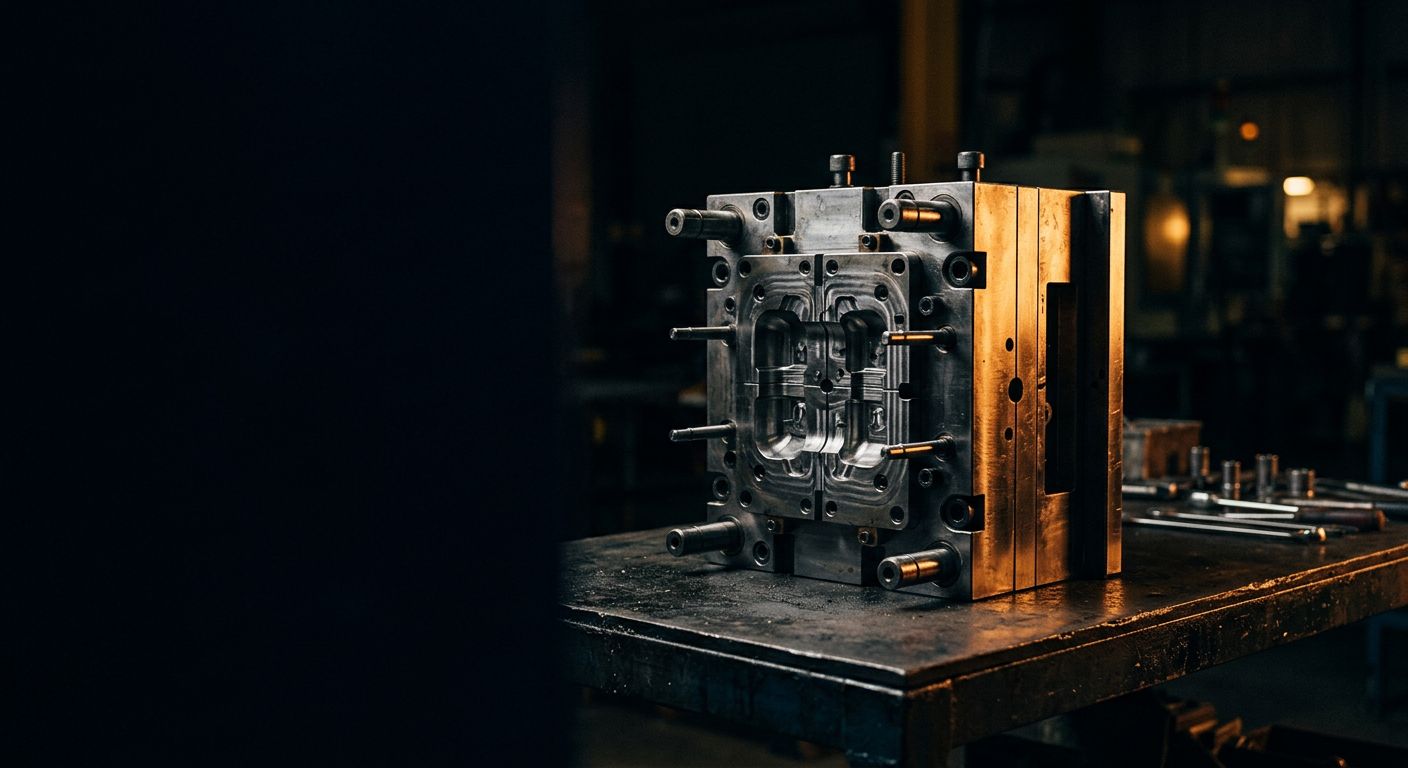
Molds are tools, not work product. The Wuqing District Court in Tianjin held in 2025 that a processor had no lien over three production molds and ordered them returned within 10 days ((2025)津0114民初7416号).
Holding molds while suing for the money is abuse. The Dalian Intermediate Court held in 2023 that a processor had abused its lien. It had already sued separately for its fees (that case awarded it RMB 40,619.53), and the customer had bank deposits it could have frozen, yet it kept 246 molds valued in the claim at about RMB 1.99 million. The court ordered the molds returned, or paid for at the listed price ((2023)辽02民终7594号).
Once tooling is paid, the lien is gone. The Shanghai No. 2 Intermediate Court held in 2019 that the processor's lien ended when the design and manufacturing costs were paid. It rejected the factory's demand that the molds move only together with raw materials and finished goods ((2019)沪02民终4570号).
The other side matters too. Where the buyer genuinely owed money, courts have upheld the factory's lien. In a Ningbo case the customer had not paid the processing fees in full, and the factory stopped the truck and kept 23 molds. The court held the factory was entitled to the lien and rejected the customer's claim for the cost of re-making the molds, which it had recovered during the lawsuit ((2023)浙02民终1408号). In Shenzhen, where a separate judgment had found the buyer owed the factory for goods and mold fees, the court refused to order 44 molds returned ((2021)粤03民终6808号). Whether you owe money is the dividing line in most of these cases.
Don't send a truck. The Wuxi Intermediate Court reported a case in which a creditor owed more than RMB 400,000 stopped the debtor's car and had it driven away. The court called it a tort and ordered the car returned within 10 days. Chinese procedure law also makes privately seizing property to collect a debt punishable (Civil Procedure Law, Art. 120). Every recovery goes through a court.
Assemble your ownership file. The contract or PI language on tooling, separate payment records for the tooling, the mold list (numbers, photos, T1 reports), and any message where the factory calls them "your molds."
Check whether you owe anything. If there's a legitimate, due invoice, paying it or putting up security for the disputed amount (Article 457) is often the fastest way out.
If the molds may be moved, sold or used for copies, move fast. Under Article 104 of the Civil Procedure Law, you can apply before filing suit to the court where the molds are. You must post security, and the court must rule within 48 hours. You then have 30 days to sue, or the freeze is lifted. Litigation-preservation insurance can usually stand in for cash security. More on how a pre-suit freeze works: Can I freeze a Chinese supplier's bank account before I sue?
Know what a freeze does. It stops the factory from moving or using the molds. It doesn't hand them to you. Delivery normally comes after judgment, at enforcement (Art. 260).
Plead a fallback amount and a place. Ask for return of the listed molds or a stated sum if they can't be returned. And expect to collect them yourself: in a 2020 case the Dongguan Intermediate Court ordered 11 molds returned but refused to make the factory deliver them, because the contract named no place of delivery ((2020)粤19民终6764号).
When it's not worth it
Sometimes the honest answer is to re-tool. If a new set of simple molds costs less, and takes less time, than preservation, litigation, enforcement, rigging and freight, recovery is a poor trade. The exception is when the old molds are making copies of your product. Then getting them back, or destroyed under supervision, protects the product, not just the tooling cost. Run that comparison before you file.
FAQ
I paid the mold fee. Doesn't that make the mold mine?
Not automatically. Payment is strong evidence, and Chinese courts have relied on payment records to find ownership. But a court reads the whole record. A clause that says the factory owns the tooling, or a fee described as a "development fee," can defeat you. Wording that says you own the molds and the factory holds them for you does most of the work.
As a foreigner, is my mold contract worth anything in a Chinese court?
Yes. In the Stern case above, a German company enforced its Mold Ownership Agreement in a Guangzhou court, which even applied the German law the parties chose. Foreign status was no obstacle. What matters is clear wording and proof of payment.
Does the contract have to be in Chinese?
No, but a Chinese court will need a Chinese translation of any foreign-language document you rely on, and a foreign company's corporate and authorization papers must be notarized and authenticated or apostilled. A bilingual contract with a stated controlling language saves time and translation fights later.
The factory wants 'storage and maintenance fees' before it releases the molds. Do I have to pay?
Only if you agreed to them or they reflect real costs the factory can prove. An invented release fee isn't a debt, and the lien can't exceed what you actually owe (Article 450). If there's a genuine dispute over a small amount, offering security for it (Article 457) can end the lien without conceding the claim.
Our tooling was amortized into the unit price. Who owns the molds?
It depends on the agreement. If ownership was meant to pass once a set volume shipped and that volume was never reached, the factory may have a real claim for the unrecovered tooling cost. Where the paperwork is unclear, a court may recognize only a share. Read the amortization terms before you demand anything.
Send us your tooling contract or PI, proof of payment, the mold list, and the factory's latest message through our case review form. We'll tell you whether recovery looks worth pursuing, and what it would involve, before you spend anything on litigation. Our tooling and OEM contract services cover mold sealing, return actions and contract drafting.
Facing this with a Chinese counterparty? Send a short, non-confidential summary. We run a conflict check and a preliminary review within 2 PRC business days.
Huadu District Court, Guangzhou · (2018)粤0114民初4165号 · German buyer Stern’s USD 16,000 payment under a Mold Ownership Agreement made the molds its own; the return-on-demand clause ruled out a lien, and the molds were ordered returned in March 2020.
Wuqing District Court, Tianjin · (2025)津0114民初7416号 · Production molds are tools, not work product; the processor had no lien over three molds and had to return them within 10 days.
Dalian Intermediate People’s Court · (2023)辽02民终7594号 · A processor that sued separately for its fees while keeping 246 molds abused its lien; the molds were ordered returned or paid for at the listed price.
Shanghai No. 2 Intermediate People’s Court · (2019)沪02民终4570号 · The processor’s lien ended once design and manufacturing costs were paid.
Court in Ningbo (not further named in the article) · (2023)浙02民终1408号 · Where the customer had not paid processing fees in full, the factory was entitled to its lien over 23 molds.
Shenzhen Intermediate People’s Court · (2021)粤03民终6808号 · Where a separate judgment found the buyer owed the factory for goods and mold fees, return of 44 molds was refused.
Dongguan Intermediate People’s Court · (2020)粤19民终6764号 · 11 molds were ordered returned, but the factory wasn’t required to deliver them because the contract named no place of delivery.
Wuxi Intermediate People’s Court · no case number given in the article · A creditor that stopped a debtor’s car and had it driven away committed a tort and was ordered to return the car within 10 days.
Civil Code quotations follow the National People's Congress English translation, which is for reference only; the Chinese text prevails. Civil Procedure Law references are to the 2023 amendment, in force since January 1, 2024.
This article is general information, not legal advice for your situation. Reading it does not create a lawyer-client relationship. Outcomes depend on the evidence, the court's discretion and the other party's ability to comply.
This article is general information on the law of the People's Republic of China, not legal advice. Reading it does not create a lawyer–client relationship. Outcomes in the cases cited depend on their own facts and do not predict the outcome of yours.